
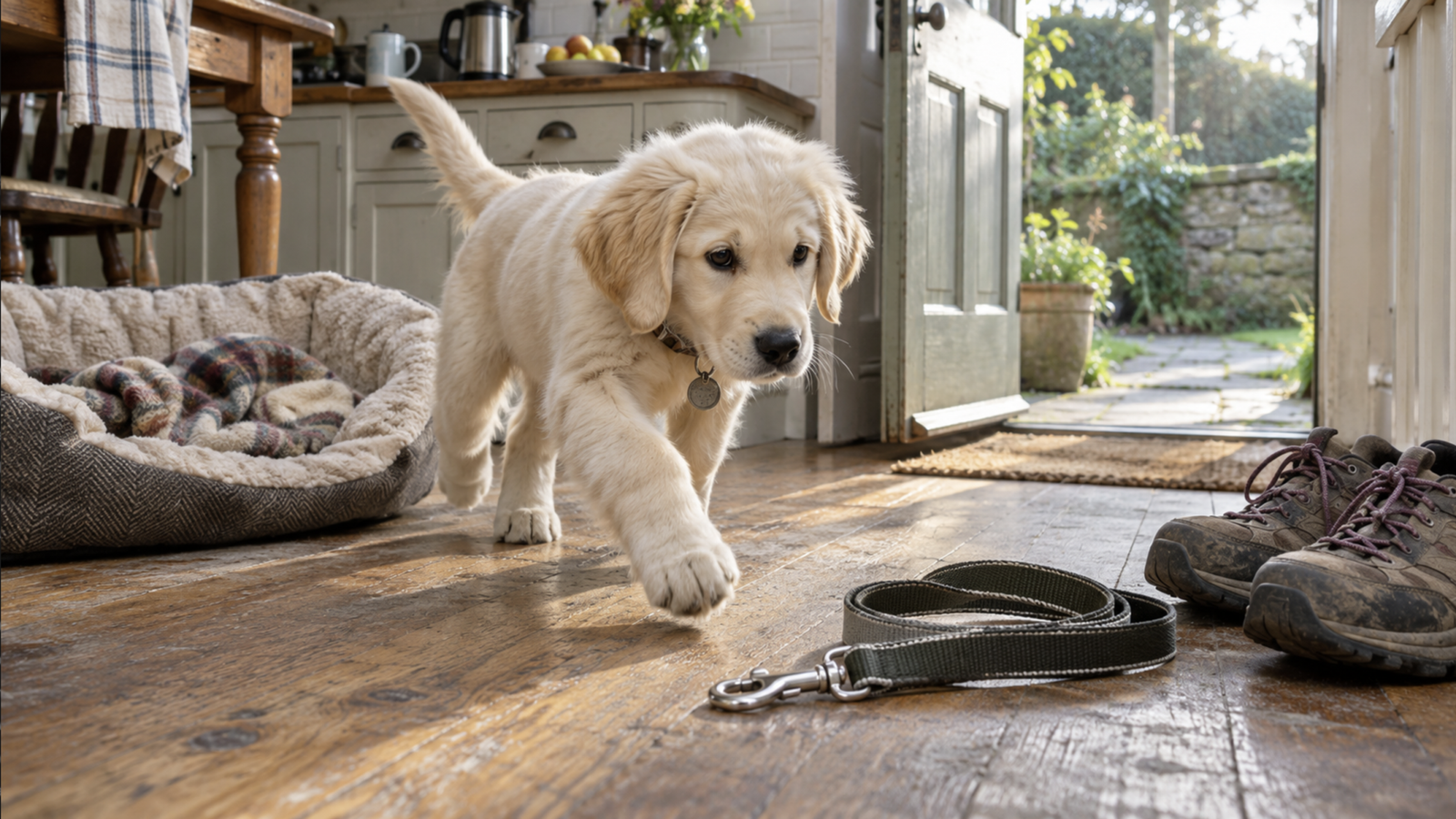
A useful puppy training schedule gives care a predictable order while leaving room for changing naps, toilet needs, and attention. The sample day below helps you organize your puppy’s first month at home; “perfect” means workable for your household and puppy, not a promise of obedience or accident-free days within 30 days.
How to set a realistic training timetable
Begin with what cannot move: work commitments, school runs, appointments, and who can provide care. Put those responsibilities on paper before adding practice sessions. An empty caregiver column is a problem to solve, not a period your puppy should simply learn to tolerate.
Add your puppy’s feeding plan, water access, rest, and likely toilet opportunities. Use both events and approximate times. “After waking” protects a real need even when a nap finishes earlier than expected.
The Dogs Trust first-day guidance describes a calm start with familiar food routines, rest, play, and early toilet support. Build your own timetable around those needs rather than copying an internet schedule minute for minute.
Choose one or two useful skills to practice when the puppy is comfortable. Name response while you prepare a reward or a short calm greeting can fit into ordinary care. Do not fill every awake period with a lesson.
A sample weekday schedule and flexible weekend variant
The times below are original examples for a household starting at 7:00. They are not recommended bladder-holding intervals, required sleep blocks, or a feeding prescription. Add toilet opportunities whenever needed, including between the listed rows.
| Example time or event | What the caregiver provides | Flexible training opportunity |
|---|---|---|
| 7:00 or first waking | Toilet opportunity; water and comfort check | Reward attention during an easy transition |
| Breakfast according to feeding plan | Meal; toilet support afterward | A few name-response rewards if comfortable |
| Morning awake period | Supervised play and exploration | One brief cue practice, then a break |
| When sleepy | Quiet, undisturbed resting place | No lesson required |
| Each waking | Toilet opportunity and supervision | Reward the chosen toilet location |
| Midday | Caregiver handover; meal if due; suitable activity | Repeat an easy skill, not a harder test |
| Afternoon | Rest, toilet support, and supervised activity | Comfortable handling introduction if appropriate |
| Evening | Meal if due; calm household time | Short greeting or mat practice |
| Before bed | Toilet opportunity; agreed overnight support | Calm transition without pressure |
A flexible weekend variant
Keep the care sequence even when people wake later or outings change. If the puppy wakes at the usual time, someone still needs to respond. A household lie-in should not create a long wait for toilet access.
If visitors arrive, protect a resting place away from the activity. You can skip a planned cue session after a stimulating outing; the day already contains learning and activity. Record what happened so tomorrow’s plan reflects it.
Blank rows for your own day
| Time or event | Care planned | Responsible person | Actual outcome |
|---|---|---|---|
Keep the editable one-day planner beside the door or in a shared place caregivers actually check.
How feeding, sleep and toilet breaks fit together
Think in sequences rather than fixed gaps. A nap ends, a caregiver offers a toilet opportunity, and then the puppy has an appropriate awake activity. A meal creates another transition to watch. Active play can mean a need appears sooner than it did during quiet rest.
Carry suitable rewards to the toilet area and observe whether toileting actually happens. An unsuccessful trip should be recorded as such, with close supervision afterward. Walking around outside is not evidence that the puppy emptied their bladder or bowel.
Its purpose is different from this whole-day rhythm.
Fit practice into care without turning care into a test
You might reward turning toward a name before a calm interaction, or a voluntary moment on a mat while you sit nearby. Food, water, toilet access, and rest remain available regardless of whether the puppy performs a cue.
If the puppy struggles, ask what would make practice easier. A quieter room may help more than a more valuable treat. If they pull away during handling, stop and revisit a smaller step; the grooming row is not permission to restrain them through fear.
Solve the midday gap honestly
Suppose everyone is out from 9:00 until 13:00. Write down the actual care arrangement: a suitable caregiver, a visit, or an appropriate setup with needed toilet access. Do not fill four hours with “crate” and assume the schedule is complete. Crate comfort and safe care are individual issues, and confinement cannot replace toilet support.
Adjusting the schedule as your puppy grows
During the first few days, record more than you predict. Note waking times, successful toileting, periods that became too exciting, and who was available. Later, use those patterns to change the timetable in small ways.
Here is a practical first-month review rhythm, not a training deadline:
- Early days: prioritize clear care coverage and a comfortable environment.
- After some records accumulate: identify a repeated gap and adjust it.
- As familiar habits improve: try a small change in location or supervision while keeping safety support.
- At the end of the month: keep useful routines and choose the next realistic goal.
Troubleshoot the timetable, not the puppy
If the puppy naps through your intended lesson, reschedule the lesson. If evening activity ends in frantic mouthing, reduce stimulation and review rest. If an outing is repeatedly missed during dinner preparation, assign a specific caregiver before cooking starts.
Do not stretch toilet gaps or reduce drinking to match older entries. Ask your vet about sudden urinary changes, pain, blood, or repeated small amounts. Straining with little or no urine needs urgent care. Persistent diarrhea, vomiting, poor appetite, or lethargy also requires veterinary advice; a more disciplined timetable is not a medical treatment.
Frequently asked questions
How many short training sessions does a puppy need?
There is no single required count. Start with a few brief opportunities the puppy can enjoy, and include informal rewards during daily life. A session might contain only several repetitions. Watch comfort and engagement rather than trying to achieve a number while the puppy is tired, hungry, frightened, or in need of the toilet.
What if my puppy cannot follow the sample timetable?
Change it. Keep essential care covered, use event-based reminders, and move optional practice around the puppy’s actual day. If the plan repeatedly fails during a household commitment, change the caregiver arrangement. If needs change suddenly or seem abnormal, consult your vet rather than forcing the puppy into the previous pattern.
Start tomorrow’s sheet with the first waking trip and the busiest caregiver handover. Once those are practical, add the rest of the day around them.
One-day puppy planner
Puppy: Date: Caregiver:
| Time or event | Care planned | Caregiver | Actual outcome |
|---|---|---|---|
| First waking | Toilet opportunity; water check | ||
| Breakfast | Follow feeding plan; toilet support | ||
| Awake period | Supervised activity; brief easy practice | ||
| Rest | Comfortable quiet space | ||
| Next waking | Toilet opportunity | ||
| Midday | Meal if due; caregiver handover | ||
| Evening | Suitable calm activity | ||
| Bedtime | Toilet opportunity; overnight care | ||
One useful observation:
Next adjustment:
Illustrative daily rhythm, not bladder limits or a 30-day training guarantee. Add care whenever needed. Keep water available.
Original editorial resource; companion article contains sources.
Sources
Sources checked 3 November 2026. Examples, practice plans, and resources are original editorial suggestions, not validated deadlines or reported case studies.
- Dogs Trust: Day one with a new puppy.
- MSD Veterinary Manual: Urinary Emergencies in Dogs.
- Battersea Square Vets: Diarrhoea or Soft Faeces in Dogs: Advice from Battersea Square Vets.